Working from home isn’t just causing back problems – foot pain is also on the rise
Advertizing
Health
Working from home isn't just causing dorsum issues – foot hurting is also on the ascent
It may not be coincidence that the arches on your feet are giving you lot problems – and information technology could be considering of something as "harmless" as walking or exercising barefoot at home.
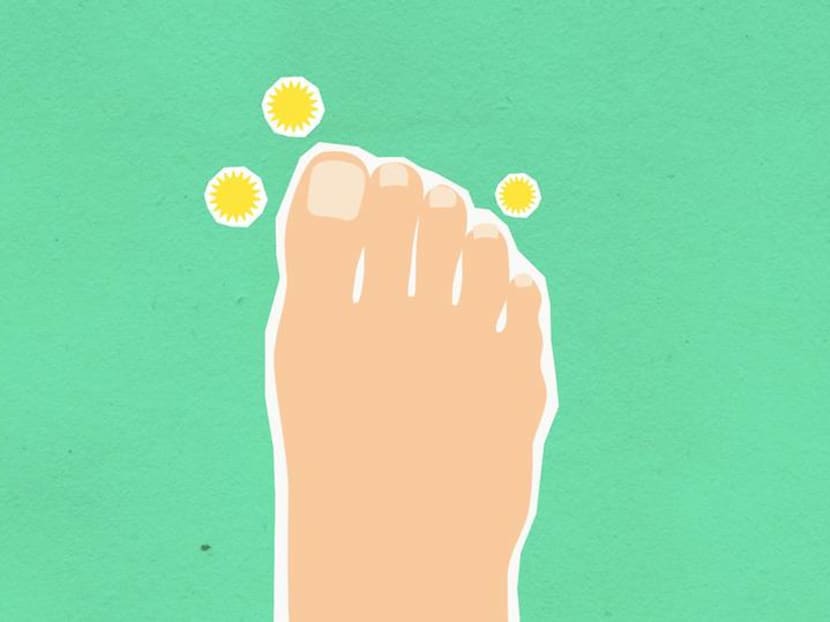
(Art: Pexels/Gabby K)
17 February 2022 06:30AM (Updated: 08 Aug 2022 03:04PM)
You've been staying at home a lot more and that'south not going to alter much this year. Which means it wouldn't be a stretch to say many people are nevertheless dealing with work-from-home (WFH) aches and pains.
But while issues with one's back and neck are at the top of the list, there'south one part of the body that has surprisingly been giving many a hard time – the feet.
According to orthopaedic surgeons, human foot hurting has increased since WFH arrangements began last April.
Dr Victor Seah from Mount Elizabeth Novena Hospital noted a ii to three-fold increment in the number of such cases. Meanwhile, Dr Kevin Koo, who is from Mount Elizabeth Infirmary, has also seen "an estimated increase of ten per cent to xv per cent, typically in the active working population".
Senior principal physiotherapist John Abraham from Rapid Physiocare has as well noticed an uptick in the number of patients with foot pain. "The increase has been quite alarming every bit the number of such patients has been far more the average number I am used to treating," he said.
WHAT'South CAUSING THE FOOT Pain?
According to Chng Chye Tuan, a senior principal physiotherapist from Core Concepts, most foot pain is likely caused by a recent new activity you've added to your routine such as skipping at dwelling barefoot, going for long walks or hikes in the incorrect footwear – or a sudden sharp increment in the intensity of certain activities.
Pain in the arch of the foot known every bit plantar fasciitis is probably the most common cause of the pain you get from walking barefooted at home, said Dr Gowreeson Thevendran, a senior consultant orthopaedic surgeon from Island Orthopaedics Group.
READ: Like to jog or wear heels? Here's why you should accept sprained ankles seriously
The plantar fascia is a ring that connects your heel to the forepart of your foot, and supports the arch of your foot likewise as acts as a stupor absorber. "In fact, most specialists typically propose those who take plantar fasciitis to avoid going barefoot for long periods, especially on difficult surfaces like wooden floors or concrete."
The reason is this: Walking barefooted at dwelling house doesn't give your feet support, said Dr Seah. "Footwear gives additional support to the feet similar the arches," he said.
"For people with flat anxiety and low foot arches, there may be more stretch on the ankle and human foot ligaments when walking barefoot." Other pain-causing factors, according to Abraham, include bunions, corns, neuromas and underlying arthritis.
The misdeeds of your office-going days could have as well followed yous dwelling house. Women who wear loftier heels frequently often accept shortened Achilles tendons or tight dogie muscles, said Dr Koo.
"This, in turn, can put more strain on the plantar fascia, predisposing one to getting plantar fasciitis."
Men aren't exempt from their footloose days, literally. "Shoes that are too loose, too tight or without adequate support tin cause unwanted stress at different points in your foot and ankle circuitous," said Dr Gowreeson.
"Tight-plumbing equipment smart shoes with narrow toe-boxes, flexible soles and weak heel supports could all aggravate a foot that already has poor mechanics and inherent weakness."
Most human foot pain is likely caused by a recent new activeness you've added to your routine such as skipping at dwelling barefoot or a sudden sharp increase in the intensity of sure activities.
The type of flooring textile tin can brand a difference every bit well. Walking on office floors, which are often carpeted, creates a softer touch on the feet than the difficult tiles used in home floorings, said Dr Seah.
And while y'all should requite yourself a pat on the shoulder for working out at abode, doing so barefooted could be contributing to the increment in pes pain seen.
"I accept noticed more patients taking to HIIT (high-intensity interval training) exercises at habitation, and this is unremarkably done barefooted. This has led to some developing plantar fasciitis as a result of repetitive stress to the heel area," said Dr Koo.
IS GOING BAREFOOT GOOD FOR Anxiety IN THE FIRST Place?
Hang on, isn't there a schoolhouse of thought that going barefooted promotes stronger anxiety? Remember the barefoot running trend inspired by record-breaking Kenyan runners who competed shoe-less – and the accompanying slew of "footwear" (if you could call those gloves for the feet that) that brands blitz to capitalise on 10 years agone?
There are some merits. "Walking barefooted requires our muscles to be more active in order to react appropriately to the increased feedback from the contact area," said Chng. "Muscles work harder to stabilise and balance our movements."
Another pro-barefoot take is, going unshoed may assist to restore your "natural" walking pattern or gait, said Dr Koo, adding that it may amend proprioception and residual besides as foot biomechanics, which in plough, "tin also improve that of the other joints such every bit the hip and knees".
And in our humid surround, taking your shoes off gives your feet the much-needed chance to exhale. "It prevents the footwear from retaining excessive moisture or perspiration in the foot, which tin in plow, atomic number 82 to other problems like fungal infections," said Dr Seah.
READ: Why more younger Singaporeans are getting gout: Besides much beer and protein
Then, what is this nonsense most pain from walking barefoot at home when you lot've been doing so your entire life, y'all inquire.
Hither's the affair: If y'all have an existing foot consequence such as "not-optimal gait mechanics", walking barefooted excessively may increase the load on the foot and strain certain structures, said Chng.
Past that, he's referring to someone with apartment anxiety and "weakness in the stability muscles of the foot". Those with high arches can also exist prone to pain every bit they have "college pressure points with a smaller contact area", said Chng.
READ: Are shoes altering our pace and increasing clothing on our leg joints?
Otherwise, he added, "walking barefoot at home shouldn't be a big factor since the number of steps taken at home is likely to be dramatically less than walking outdoors".
WHAT Can YOU Do?
If information technology'due south plantar fasciitis, said Dr Seah, you tin await the pain to be bad in your first few steps and gradually reduces every bit you walk and stretch the plantar fascia.
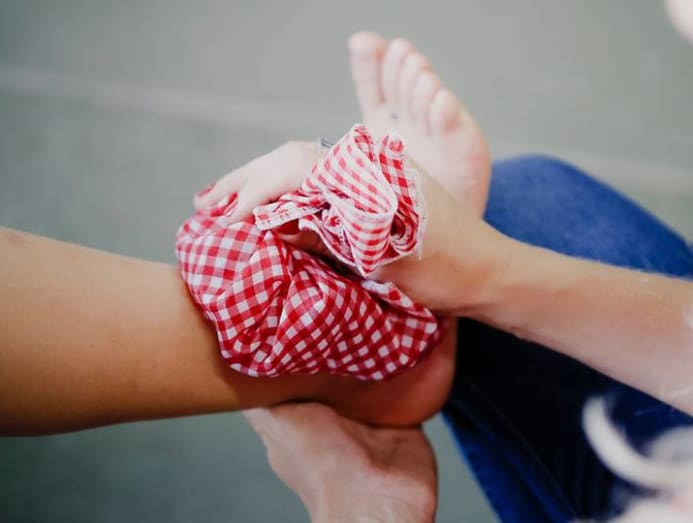
In the meantime, Dr Gowreeson suggested the RICE method to alleviate foot pain:
- Remainder: Stay off the injured foot every bit walking or running could beal the injury.
- Water ice: Apply water ice to the pes for 10 to 15 minutes at a time for the first 48 to 72 hours. Abraham strongly warned confronting placing water ice directly on skin; instead, wrap the water ice in a small material or towel earlier holding information technology to the pes.
- Compression: Wrap a bandage around the affected foot.
- Acme: Lie downwardly and elevate the affected foot so that it is to a higher place the middle.
"The pain typically takes 1 to two weeks to subside with treatment," said Dr Seah, referring to the ultrasound or shockwave sessions that tin be used along with physiotherapy and painkillers.
"Steroid injections tin be used to treat symptoms that do not respond to painkillers or physiotherapy. In some patients with recurrent symptoms or significant pes deformities, surgery may be required and to forestall the condition from worsening," he said.
READ: Pain, pain, go away: Why you shouldn't take over-the-counter painkillers lightly
"I would suggest patients to encounter their doctor if their pain does non resolve after a calendar week or two, if they are not able to put their weight to walk properly, or if there is significant swelling or bruising as it may indicate a more serious condition," said Dr Seah.To preclude plantar fasciitis- and Achilles tendonitis-related pain, effort strengthening exercises, such equally the eccentric Achilles stretch, marble pickups and toe curls, said Abraham. "Until your feet have healed, you shouldn't go dorsum to walking barefooted."
WHEN DO YOU Run into A DOCTOR PRONTO?
You should seek firsthand medical attention if you are experiencing pes pain along with the following signs:
- Diabetes with human foot ulcers
- Fever over 37.8 degrees Celsius
- An open wound on the human foot
- Hurting in both feet at the same time
- Redness, swelling, warmth, and tenderness in the foot
- No pain improvement even with the simple remedies above
For the symptoms highlighted in a higher place, you should immediately meet a full general practitioner who will evaluate your pes pain and recommend handling.
"If the initial consultation with a family doctor raises farther cherry flags, a referral to a foot specialist is recommended," said Dr Gowreeson.
0 Response to "Working from home isn’t just causing back problems – foot pain is also on the rise"
Post a Comment